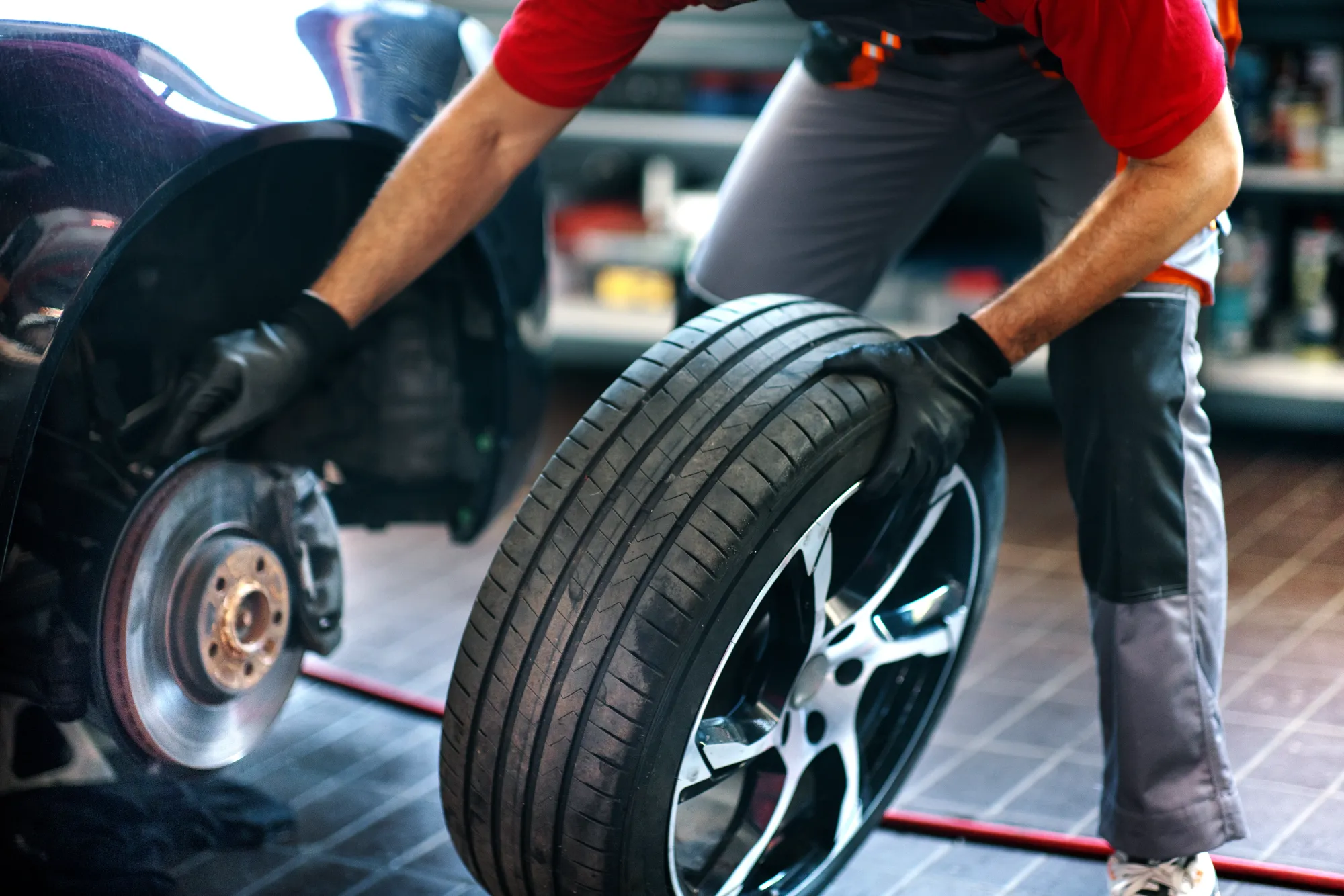
Your brakes are the one system on your vehicle that you use constantly without thinking about it. Pull out of your driveway, work down Eastern Boulevard at rush hour, sit through a dozen lights on Atlanta Highway, and you have asked your brakes to do their job more times than you could count. They almost always do it quietly.
That is why the first squeal or soft pedal is worth your attention. Brakes rarely fail all at once. They warn you first, and those warnings get louder and more expensive the longer they go unanswered. Most are cheap to fix while they are still just a symptom.
The Quick Version: How Urgent Is Each Symptom?
- Squealing or squeaking brakes. The pads are thin. Get them inspected in the next week or two.
- Grinding or metal-on-metal noise. The pads are gone and the rotor is being damaged right now. Come in this week.
- Soft, spongy, or sinking pedal. A hydraulic problem. Have it looked at immediately, and do not drive at all if the pedal reaches the floor.
- Pulling to one side while braking. Uneven braking, often a stuck caliper. Within a few days.
- Pulsing through the pedal. The rotor is no longer flat. Soon, while it can still be saved.
- Red BRAKE light on the dash. Possibly low fluid or a leak. Right away.
What Actually Wears Out
Brake pads are the wear item. They clamp a spinning metal disc to slow the vehicle, and every stop shaves a little material off them. A new pad has roughly 10 to 12 millimeters of material; once it is down to about 3 millimeters, it is done.
Rotors are the discs the pads squeeze. A good set lasts through two or three sets of pads, but only if the pads get replaced before they wear out completely. When pad material runs out, the steel backing plate rides straight on the rotor and carves grooves into it.
Brake fluid carries the pressure from your foot to the pads. The system is sealed, so the level should not drop on its own. Fluid does absorb moisture over the years, which softens the pedal, so most manufacturers call for a flush every two to three years.
Squealing or Squeaking Brakes
A high-pitched squeal when you press the pedal is the most common brake complaint we hear, and it usually has a simple cause. Most pads include a wear indicator, a small metal tab set so it touches the rotor once the friction material gets thin. That contact is the squeal, and it is a deliberate warning that the pads are near the end of their life.
How urgent? Moderate. You have not lost stopping power today, but you are on a clock. Come in within a week or two and you will very likely be replacing pads only.
A few squeaks are harmless. A light squeak on the first stop of a humid morning is surface rust that formed on the rotors overnight, and it scrubs off in a block or two. A brief chirp after rain is the same thing with water. The difference is repeatability: noise on every stop, all day, is a worn part talking.
Grinding or a Metal-on-Metal Scrape
If squealing is a polite warning, grinding is the bill arriving. A deep metallic grinding or growling when you brake generally means the pad material is gone and metal is riding on metal.
How urgent? High. Your stopping distance is growing, because bare steel is a poor friction material, and every mile is cutting grooves into a rotor that was probably fine a few thousand miles ago. Wait for the grind and you may need pads plus rotors, and calipers too if one seized or overheated along the way.
A Soft, Spongy, or Sinking Pedal
Pay closer attention to pedal feel than to noise. A pedal that feels mushy, travels farther than it used to, or slowly sinks while you hold it at a red light points at the hydraulic system rather than at worn pads. The usual causes are air in the lines, fluid that has absorbed too much moisture, a leaking line, or a failing master cylinder.
How urgent? Highest on this list. A worn pad degrades gradually and predictably. A hydraulic problem can go from slightly soft to a pedal on the floor without much warning in between. If the pedal has changed how it feels, have the vehicle inspected immediately. If it sinks to the floor, or you find a puddle of clear to brownish oily fluid near a wheel, do not drive it. Call for a tow.
Pulling to One Side When You Brake
If the wheel tugs left or right the moment you press the pedal, the brakes are not applying evenly. Common culprits are a sticking caliper on one side, a collapsed hose restricting flow to one wheel, or uneven pad wear.
How urgent? High. Uneven braking lengthens stopping distance, especially in a hard stop or on a wet road. A sticking caliper also runs hot, cooking the pad and warping the rotor, so the repair grows while you wait.
Pulling that happens all the time, not only under braking, is usually alignment or tires instead. Our guide to the signs your vehicle is due for a wheel alignment covers that side of it.
Vibration or Pulsing Through the Pedal
A rhythmic pulse or shudder through the pedal generally means the rotor is no longer perfectly flat. Heat is the usual cause: repeated hard stops can put enough heat into a rotor to distort it slightly or leave pad material deposited unevenly across its face.
How urgent? Moderate. It is more annoying than dangerous at first, but a distorted rotor wears its pads unevenly and does not deliver full braking force. Caught early, some rotors can be resurfaced. Left alone, they get thin and have to be replaced.
Dashboard Brake Warning Lights
The red BRAKE light is the serious one. It can mean the parking brake is still engaged, the fluid level is low, or the system has detected a pressure problem. Check that the parking brake is fully released first. If the light stays on, treat it as a possible leak and get the vehicle inspected right away.
The amber ABS light means the anti-lock system has faulted, usually a wheel speed sensor. Your normal brakes still work, but you may lose anti-lock help in a panic stop.
Why Waiting Turns a Small Job Into a Big One
- Pads only. Caught at the squeal. The simplest brake service there is, and the rotors live for another set.
- Pads and rotors. Caught at the grind, once the backing plate has scored the rotor.
- Pads, rotors, and a caliper. A caliper that seized or overheated while dragging on a ruined rotor, which adds hydraulic work and a brake bleed.
Each stage started as the same worn pad. The only variable was how long the vehicle kept driving on the warning.
Schedule Your Brake Inspection
If your brakes are squealing, grinding, pulsing, pulling, or the pedal just does not feel the way it used to, do not wait for it to get worse. Schedule an appointment with Sexton Tire & Auto at 2718 Zelda Rd and we will pull the wheels for a real look, tell you what needs attention now and what can wait, and give you a current quote for your vehicle.